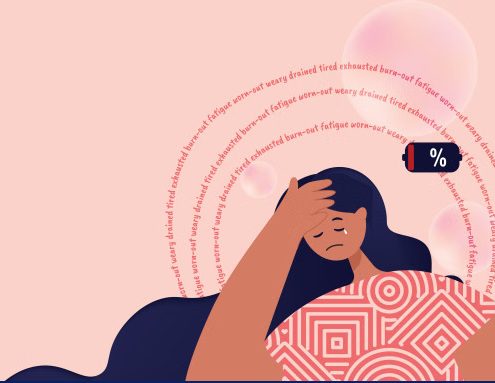
In some city, in some room washed blue by the light of a screen, there is a girl discovering that awareness is much easier to awaken than it is to survive.
At first, knowing felt like coming up for air. Like breathing after being held underwater and realising that there was an entirely different world out there. Those eureka moments gave her a passionate rush to fight, speak out, be bolder. So she blazed on with her chin up and shoulders squared.
Every time she’d engage in a conversation, she’d pick at it until she found the misogyny buried underneath. Then she’d pick and pick like reopening a wound that had almost healed. She realised the world was a tangled mess of threads, and to pull at one meant unravelling everything else with it.
She fought online and offline, changed opinions (or tried to), defied the system, until everything that once felt urgent began to flatten into monochrome. Soon all issues felt like one giant grey cloud, swollen with every headline and repost and statistic until she could no longer tell where one injustice ended and another began.
After a long day, she’d turn on her phone and the first thing she’d see would be someone talking about yet another headline, and she’d like the post, repost it, leave a comment that sounded intelligent enough to prove that she still cared, and then quietly switch accounts. She’d feel so guilty for doing that, but she was tired. Though she would never admit that online.
She watched women online speak about leaning into femininity, choosing softness, letting the man earn, embracing lives that revolved around male comfort, and suddenly the spark of rage returned. Part of her understood the appeal. Burnout morphed the idea of freedom, and made dependency look emotionally seductive and soft. But understanding it did not make it any less disappointing.
Because she could not stop thinking about the women who fought for rights only for other women to romanticise handing them back. It’s because she knows exhaustion can make old cages look comfortable again.
Then sometimes she wondered whether she had trapped herself inside a padded room covered in screens, each one reflecting a different fracture in the world. Other times she questioned if she had stared at those fractures for so long that they now seemed to stretch endlessly in every direction.
The thing was, she hated how lonely it felt. Awareness had once made her feel connected to other women; now it often left her alone with her anger, alone with her guilt, alone with the feeling that she should be able to carry more than she could. And maybe that was the cruelest part of it all: how private the exhaustion felt. As though every woman believed she was failing feminism alone.
This girl is me. This girl is you. The girl is every woman who has grown tired of carrying awareness like a second skin. Maybe it was never supposed to feel empowering forever. Sometimes it feels ugly and exhausting and unbearably heavy. But exhaustion does not erase what she knows now. Even when she looks away for a while, the world does not become smaller again.
Once seen, certain things remain impossible to unsee.
(Images don’t belong to me. Credit for image given to owner)
Leave a Reply